Create a home office where you can thrive
A new season brings new routines. As you settle back into work again, it's the perfect time to rethink how your workspace supports you throughout the day. Whether you're working from a dedicated home office or the dining table, incorporating more movement into your day can make a real difference. The goal isn't perfect posture, but regular movement and variety. We've gathered answers to some of the most common questions about working from home, along with practical tips to help you create a home office setup that supports both your wellbeing and productivity.
How can I avoid distractions and stay productive while working from home?
Working from home comes with plenty of distractions, from household chores to phone notifications. Creating a routine and a workspace that's dedicated to work, even if it's just a corner of a room, can help you stay focused throughout the day. A few simple habits can make a big difference:
- Create a dedicated workspace. Even if it's only a small area, having a consistent place to work helps separate work from home life.
- Start your day with a routine. Getting dressed, making a coffee, or taking a short walk before you begin can help you switch into work mode.
- Limit distractions. Silence unnecessary notifications and keep your phone out of reach when you need to concentrate.
- Plan your day. Identify your three most important tasks before you begin work.
- Take regular breaks. Stepping away from your screen for a few minutes can help you return with renewed focus.
- Keep your workspace tidy. A clutter-free environment can make it easier to concentrate on the task at hand.
QUICK TIP: THE BEST WORKSPACE IS ONE YOU'LL ENJOY RETURNING TO EVERY DAY. A FEW THOUGHTFUL DETAILS CAN MAKE IT EASIER TO FOCUS FROM THE MOMENT YOU SIT DOWN.
How can I improve my wellbeing when working from home?
Working from home can change how much you move during the day. Without a commute, walking between meetings or other natural breaks, it's easy to spend longer periods in the same position. Over time, this can contribute to stiffness and discomfort.
- Build movement into your routine. Stand up between meetings, stretch, or take a short walk during your lunch break.
- Stay connected. Social interaction is healthy, even while working from home. Call a colleague instead of sending a message, or schedule coffee chats to maintain social connections.
- Create clear boundaries. Start and end your workday with a simple routine to help separate work from personal time.
- Get outside when you can. Even a short walk or a few minutes of fresh air can help you reset and recharge.
- Make your workspace somewhere you enjoy spending time. A comfortable, inviting environment can make your workday feel more enjoyable.
QUICK TIP: WORKING FROM HOME OFTEN MEANS MOVING LESS WITHOUT REALIZING IT. BUILD MOVEMENT INTO YOUR ROUTINE IN WAYS THAT FEEL NATURAL - WHETHER THAT'S STANDING DURING CALLS, STRETCHING BETWEEN TASKS, OR CHOOSING A CHAIR THAT ENCOURAGES MOVEMENT WHILE SEATED.
How often should I get up while working from home?
There isn't one perfect schedule, but a good rule of thumb is to change your position often and get up to walk at least once every hour. That doesn't mean you need to stop working, simply standing up, stretching, shifting your sitting position, or walking for a minute can help reduce stiffness and keep your body engaged.
When you're deeply focused, it's easy to stay in one position for hours without noticing. Setting a reminder, standing during phone calls, or taking a quick walk to refill your water are simple ways to add movement throughout the day.
The goal isn't to avoid sitting altogether, it's to avoid sitting still for too long. Regular movement supports circulation, reduces muscle fatigue, and can even help maintain focus and energy throughout the workday.
QUICK TIP: IF YOU'RE USING A VARIER CHAIR, YOU'LL NATURALLY MAKE SMALL MOVEMENTS WHILE SEATED, BUT IT'S STILL BENEFICIAL TO STAND UP AND MOVE AROUND REGULARLY. ACTIVE SITTING COMPLEMENTS MOVEMENT, IT DOESN'T REPLACE IT.
How often should I get up while working from home?
Back discomfort while working from home is common, especially if you spend long periods sitting in the same position. Often, it's not caused by sitting itself, but by staying still for too long. A workspace that's not set up for regular computer use, such as a dining table or kitchen chair - can also contribute to muscle fatigue and discomfort over time.
Many people associate back pain with posture alone, but regular movement is just as important as ergonomic support. Simple changes can make a difference. Adjusting your screen height, keeping frequently used items within easy reach, and changing positions regularly can all help reduce strain. Choosing a chair that supports natural movement while seated can make this even easier. Rather than encouraging one fixed sitting position, it supports gentle, continuous movement throughout the day, helping movement become a natural part of your work routine.
QUICK TIP: A WORKSPACE THAT SUPPORTS REGULAR MOVEMENT DOESN'T JUST MAKE YOU MORE COMFORTABLE WHILE YOU'RE WORKING. IT CAN ALSO HELP YOU FINISH THE DAY FEELING LESS STIFF AND MORE READY TO ENJOY YOUR TIME AWAY FROM YOUR DESK.
Whats the best home office setup?
An ergonomic home office setup doesn't have to mimic a traditional office. For many people, working from home means sharing space with everyday life, whether that's the dining table, kitchen island, or a corner of the living room. A few simple adjustments can make a big difference:
- Raise your screen so the top sits at or just below eye level.
- Change your working position throughout the day rather than trying to maintain one posture.
- Keep your keyboard and mouse within easy reach to help your shoulders stay relaxed.
- Combine natural light with a desk lamp or floor lamp rather than relying on a single overhead light.
- Select furniture that works for more than just work, especially if your workspace is part of a shared living area.
QUICK TIP: YOU DON'T NEED A SEPARATE OFFICE TO CREATE A COMFORTABLE WORKSPACE. SMALL CHANGES, SUCH AS CHOOSING A CHAIR THAT ADAPTS TO DIFFERENT ACTIVITIES THROUGHOUT THE DAY, CAN HELP YOU GET MORE OUT OF THE SPACE YOU HAVE.
Find the right solution for your workspace
Dedicated home office space
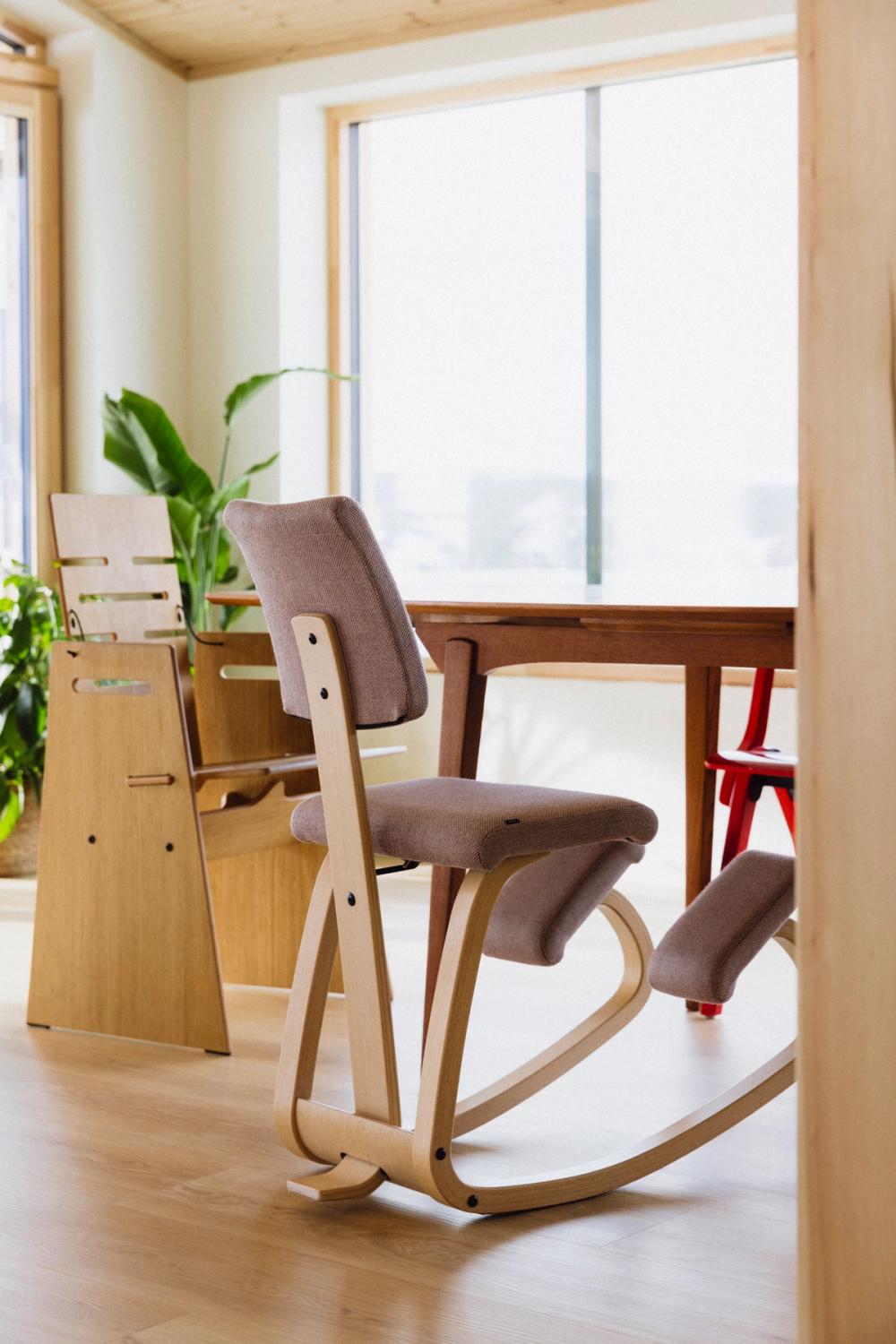
If you work from home full time, it's worth investing in a workspace that supports both comfort and movement. A height-adjustable desk paired with a chair that encourages natural movement gives you the flexibility to change position throughout the day. By alternating between sitting, standing and moving, you reduce stiffness and support your overall sense of wellbeing. Pair a height-adjustable desk with Move™ and Thatsit™ or Variable™ Plus for maximum freedom to alternate between positions. Use Move™ when working at standing height or for tasks that benefit from greater mobility, then switch to Thatsit™ for focused work. With its adjustable seat and shin pads, supportive backrest and armrests, Thatsit™ is designed for long hours at your desk. If you prefer a simpler chair, Variable™ Plus offers the same kneeling chair comfort with the added comfort of a backrest.
Dining table or shared living space
If your workspace is part of a shared living area, look for furniture that works across different activities. Chairs that are lightweight, easy to move and comfortable enough for both work and everyday use can help you create a flexible workspace without taking over your home. Multifunctional designs such as Variable™, Multi™ and Social® Tilt are designed to move easily between activities while supporting natural movement during work. Smaller kneeling chairs such as Variable™ and Multi™ are lightweight, easy to move and simple to store when not in use. If you prefer a more traditional dining chair aesthetic, Social® Tilt follows your body's natural movements while allowing your pelvis to tilt forward more naturally when you lean in, helping you maintain a more open, natural posture while working at the table. Move™ Compact works at standard table heights and also doubles nicely as a spare seat for guests when not in use as a work chair, lightweight easy to move.
Find the right chair for you
Choosing the right chair can significantly improve your days working from home. A chair that not only supports you through long hours but also adapts to the flow of your day, empowering you to achieve your best. Browse our collection to find the one that best suits your needs.