She has been drawn to making things for as long as she can remember. As a child, she would spend hours drawing, long before she had the words for what she was doing. That curiosity later led her to a year in a carpentry workshop at vocational school, where she learned to work with materials, tools, and construction.
A Life Across Design
For Hilde Angelfoss, design has never been just about how something looks. It’s about what it does, how it shapes the way we live, move, and interact, often without us even noticing. Over the years, she has worked across the full spectrum of design - from workshop to industry, from product development to teaching. But the core has remained the same: a curiosity for how things are made, and what they do once they leave the drawing board and enter everyday life.
Photos by Johanne Nyborg
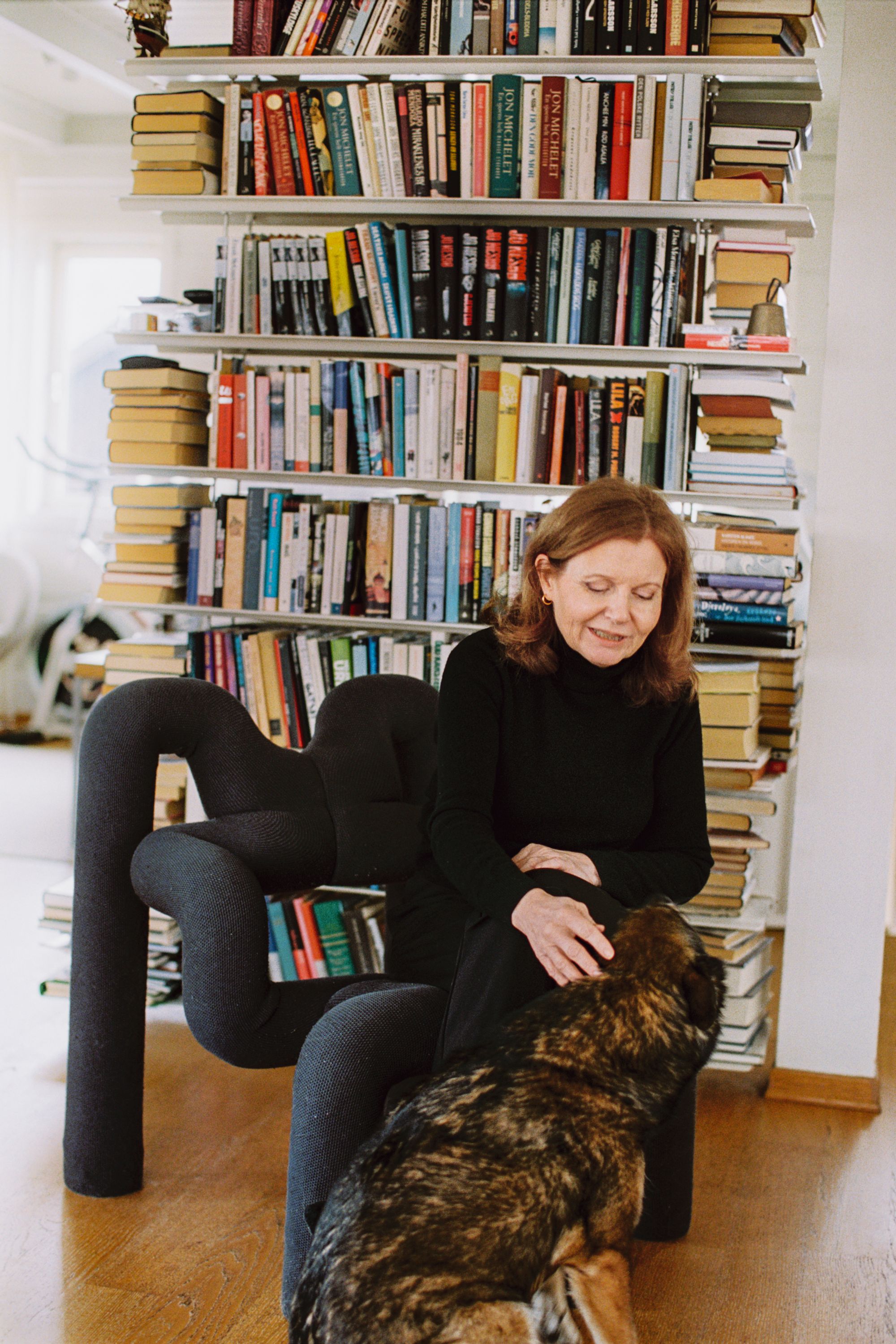
Ekstrem™ finds a natural place in her home, and she notes it is far more comfortable than many might expect, offering both lower back support and different ways of sitting.
From there, she went on to study design, before beginning her career at a design studio. Over time, she worked independently, built a company together with her husband, and went on to spend more than a decade in product development at Stokke. Since then, she has worked as both a consultant and brand manager at Ekornes. Today, she is a professor of design at The Oslo School of Architecture and Design.
“I’ve always had a need to make things. I’ve sewn, knitted, painted - and now I work a lot with ceramics.”
“I’ve always had a need to make things. I’ve sewn, knitted, painted - and now I work a lot with ceramics. When I was working as a designer, I spent a lot of time drawing products. Later, I moved into design management, and there was less of the hands-on work. I was still part of the creative process, but I missed making things myself.”
Growing up on the west coast of Norway, another influence began to take shape. Passing by the Stokke showroom, she caught glimpses of something unfamiliar in the windows. “It opened up a new world, an understanding that things could be designed, and that they could be different.” At the time, the Sunnmøre region was home to a number of pioneers, where industry and experimentation existed side by side.
Her first encounter with an Opsvik design came later, during her time in a carpentry workshop at vocational school. Visiting a factory producing parts for Variable™, she and her classmates were given the components to assemble their own chair. “It was about understanding the whole process,” she says. It was a formative experience, not just seeing a product, but understanding how it comes together.
That early insight into making stayed with her. Understanding the full process - from idea and drawing to finished object, became central to how she sees design. “You have to think about production from the very beginning,” she says. It’s a way of thinking closely aligned with Peter Opsvik. Design must be made, not just imagined. It needs to consider materials, construction, and production from the very beginning. For Hilde, that connection between idea and reality has always been essential.
“We need to work with function, with the human body and the needs we actually have. We don’t need just another pretty chair standing in a corner.”
Even a decade later, she still gets excited when she spots a stroller she designed out on the street. “I’ve had to stop myself from pointing it out every time. When I see it out there, I still feel I was part of making it. For her, it was never just about the product, but what it enables: the contact between parent and child. “I’ve seen a child at a café table, sitting in the stroller we designed, flirting with strangers. It feels like Christmas Eve. Then I feel like we’ve done something right.”
This perspective carries into her role as a professor of design. For her, design is never just about aesthetics. “We need to work with function, with the human body and the needs we actually have. We don’t need just another pretty chair standing in a corner.”
Move™ accompanies her through hours in the workshop, naturally following her movements as she works on her ceramics.
Over time, objects have found their place in her home. Some kept, some passed on, some by her own design, such as the bookshelf that separates the living room. It hasn’t been a strict curation, but something that has gradually taken shape. “I don’t think I’ve been that conscious about it. Things have just come together, little by little, like building a puzzle over the years” Norwegian design, from different brands and different periods, is present throughout the house.
“When I look around my home, I realize there’s actually a lot of Norwegian design, without it ever being a conscious choice. It’s just happened over time. Our design choices are often shaped by what’s available to us, what we’re exposed to. What’s easy to access is usually what people end up with.” It is a point she often returns to often with her students - that creating something meaningful is only part of the work; ensuring it reaches the people who need it is just as essential.
“I don’t think I’ve been that conscious about it. Things have just come together, little by little, like building a puzzle over the years.”
It’s been a long time since Hilde was confined to her bedroom to draw and make. Now, the ground floor of the house is dedicated entirely to her ceramics practice: a light-filled workshop with tall ceilings and large windows, where clay, tools, and glazes are always within reach. Not something you find in every home, the space still takes visitors by surprise. “I’ve had people over who are like, wow, you have this whole workshop at home? And I’m like - I thought everyone had that,” she laughs. Shelves are lined with bowls, cups, and pieces in progress, the traces of her process sitting alongside finished work.
As a professor, Hilde is used to giving feedback to her students. But standing in her workshop, surrounded by shelves upon shelves of unfinished ceramics, it’s clear she’s her own toughest critic. And yet, as she prepares for her first exhibition, there’s a small irony in it - she’s the one who reminds her students that at some point, you have to let what you create out into the world.