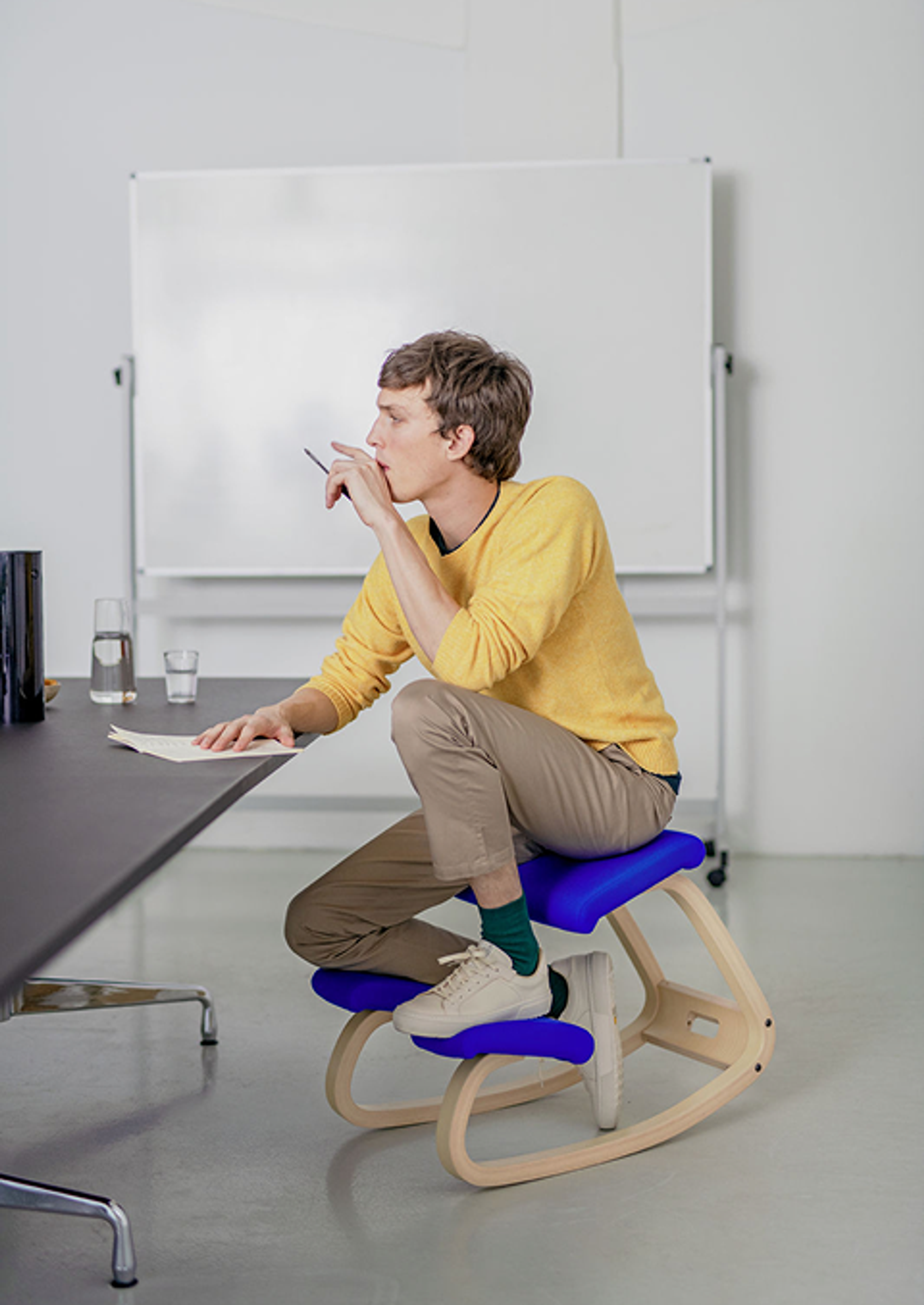
Neuroinclusive office furniture: movement that supports focus and wellbeing
Workspaces are evolving as we better understand that everyone works differently. The right environment can make a real difference, especially for those who are neurodivergent. The body is built to move, not to sit still. Most of us have simply gotten good at ignoring that. For people with ADHD, autism, dyslexia, or other forms of neurodivergence, that need for movement is often too strong to ignore - which makes it visible to the rest of us too
Read on to learn how movement and ergonomic design can support focus, comfort, and inclusive, human-centric workspaces.

Workplaces for every mind
A neurodivergent-friendly workplace can mean recognizing and supporting different ways of thinking, rather than simply following convention. Traditional office setups don’t always take sensory and attention differences into account. For instance, people with ADHD or autism may find static environments and rigid seating challenging.
Movement can make a real difference. The ability to shift, fidget, or adjust positions throughout the day can help improve focus and make it easier for neurodivergent employees to stay comfortable and engaged.² Furniture that supports these subtle movements can help create a more adaptable, welcoming workspace.
“The ability to shift, fidget, or adjust positions throughout the day can help improve focus and make it easier for neurodivergent employees to stay comfortable and engaged”
Just as adjusting lighting or sound can help us feel more comfortable, seating can play a similar role in how we experience a space. Being able to shift and move while seated allows us to respond to what our body needs in the moment. This kind of sensory autonomy can help reduce overstimulation and promote a sense of calm, especially for neurodivergent individuals.³
Neuroinclusive design can benefit everyone, not just neurodivergent employees. Providing options like kneeling chairs or sit-stand stools helps normalize movement and flexibility in the workplace, reducing stigma around fidgeting or unconventional ways of sitting. By embracing a variety of seating styles, companies can create a culture where employees feel free to “wiggle while they work,” supporting comfort, focus, and overall well-being, giving employees the freedom to focus on what really matters, rather than how to sit.
“Providing options like kneeling chairs or sit-stand stools helps normalize movement and flexibility in the workplace, reducing stigma around fidgeting or unconventional ways of sitting.”
Why movement matters at work
At Varier, we believe in one simple idea: move while you sit. Our chairs are designed to support small movements, posture shifts, and freedom from rigid positions, because sitting still doesn’t suit everyone. In fact, it does not come naturally to anyone, but cultural norms and traditional furnishings force many of us to stay sedentary throughout the day. For those with sensory sensitivities or extra energy, not having the freedom to move can make it harder to stay comfortable and engaged, which is why this kind of flexibility can make a real difference in comfort and focus throughout the day.
Enhanced employee wellbeing
Ergonomic insights show that our bodies and minds feel better when we aren’t stuck in one static posture. ⁴ Traditional office chairs often enforce a rigid ninety-degree, feet-flat position, which can feel limiting for those who need more freedom to move. Instead, our chairs encourage gentle movement throughout the day, providing a natural balance between stability and motion. Occupational therapists and psychologists have long highlighted the benefits of staying physically engaged while seated, especially for those who focus better when their body can move. ⁵ And really, we’ve all felt it: how good do you feel after a long-haul flight? How much energy and focus do you have after a full day in a meeting room with only a few breaks?
Movement is at the heart of every Varier chair. Our collection encourages gentle shifts, posture changes, and a sense of freedom, giving everyone the ability to move and sit the way they want.
A seat for every way of working
We’ve always believed that there’s no such thing as a “perfect” way to sit, only the way that feels right for you. That belief is woven into every Varier chair, making our designs naturally suited for neuroinclusive spaces.
Whether the goal is focused, heads-down work, learning, or open collaboration, our collection supports the many ways people sit and move throughout the day. Designed to blend seamlessly into thoughtful environments, our chairs quietly transform how people feel at work. By inviting movement into the workspace, you create room for difference - and with the right environment, everyone can do their best work, just as they are.
Let’s rethink the office
Varier is for anyone who sits, because no two bodies, or minds, are alike. If you are designing workspaces that celebrate human difference, we would love to collaborate. Together, we can create environments that move with people and support them in moving through the world with greater ease.
Contact usReferences
- University of California, Davis Health. (2024, October). Does fidgeting help people with ADHD focus? UC Davis Health. Retrieved from https://health.ucdavis.edu/news/headlines/does-fidgeting-help-people-with-adhd-focus-/2024/10UC Davis Health
- Son, H. M., Calub, C. A., Fan, B., Dixon, J. F., Rezaei, S., Borden, J., Schweitzer, J. B., & Liu, X. (2024, July 1). A quantitative analysis of fidgeting in ADHD and its relation to performance and sustained attention on a cognitive task. Frontiers in Psychiatry, 15, Article 1394096. https://doi.org/10.3389/fpsyt.2024.1394096 (PMCID: PMC11246969) adhdevidence.orgPMCPubMed
- A quantitative analysis of fidgeting in ADHD and its relation to performance and sustained attention on a cognitive task. PubMed. Retrieved from https://pmc.ncbi.nlm.nih.gov/articles/PMC11246969/? — (if duplicative, this entry may be removed)PMCPubMed
- The use of Multi‑Sensory Environments with autistic children (PMCID: PMC9340127). Retrieved from https://pmc.ncbi.nlm.nih.gov/articles/PMC9340127PMC
- An exploratory study on the impact of static and dynamic sitting ... (PMCID: PMC8165355). Retrieved from https://pmc.ncbi.nlm.nih.gov/articles/PMC8165355/PMC
- How does fidgeting enhance focus for individuals with ADHD? CHADD. Retrieved from https://chadd.org/attention-article/how-does-fidgeting-enhance-focus-for-individuals-with-adhdChADD