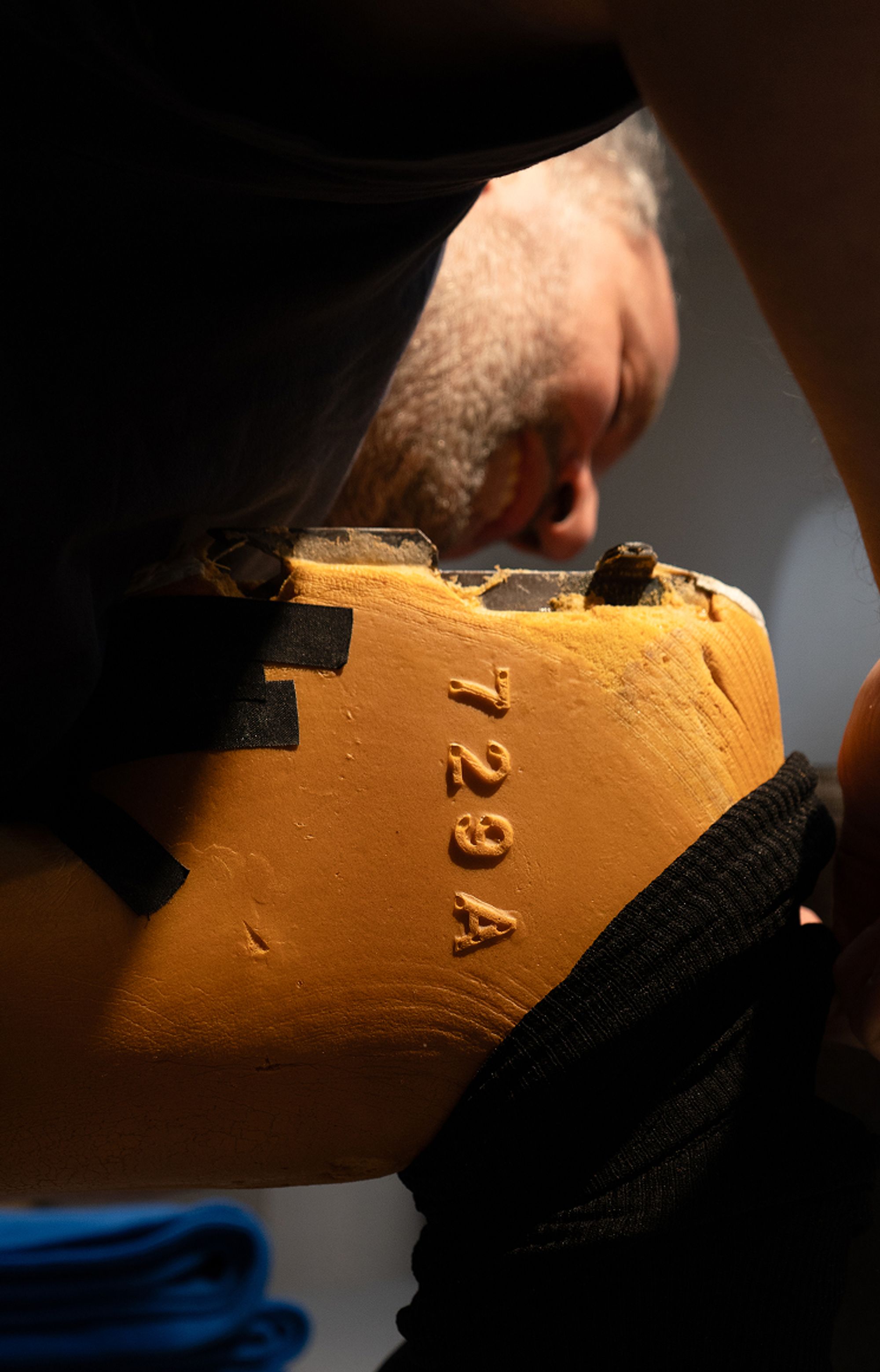
At the core of Patina Berlins work is a deep respect for the objects they work with. For them, restoring furniture is not about making something look new again, but about understanding what made the piece worth keeping in the first place. That each object carries a certain logic in its form, its construction, and the way it was meant to be used.
Patina Berlin on Reupholstering a Classic
What happens when a design classic is reupholstered? At Patina Berlin, the process goes beyond replacing fabric. When Ekstrem™ came through their hands, it became an opportunity to look closer, at materials, construction, and the ideas that continue to define the chair today.
When asked what makes a design classic, Michel Haddad of Patina points to something beyond an iconic form or recognisability. “A true classic remains relevant because it solves something, a question of comfort, function, or the way people live with objects over time. A true classic survives real life” they explain. “It can age, it can be repaired, and it can still feel desirable years later.” Pieces that meet those criteria are exactly the ones Patina enjoys working with most. They are objects designed not only to look good, but to endure use, repair, and reinterpretation over time.
"A true classic also survives real life: it can age, it can be repaired, and it can still feel desirable years later.”
“Ekstrem™ fits naturally into our idea of what makes a design classic. It doesn’t try to please everyone, and that is exactly why it has lasted. Sculptural, playful, and a little rebellious, it looks almost looks like a functional sculpture, yet its form has a clear purpose: it changes how you sit And the longer you live with it, the more you understand the idea behind it. It’s about movement, not about one ‘correct’ sitting position,” Michel says.
Reupholstering Ekstrem™ turned out to be an intense process, in a good way, according to the team at Patina. Because of the chair’s open and sculptural form, every seam, curve, and tension point remains visible. “There’s nowhere to hide. What surprised us most when opening the chair was how carefully considered the construction is beneath the surface. It looks playful and soft from the outside, but it’s built to support many different sitting positions while maintaining the chair’s iconic silhouette,” he says.
Working so closely with the chair, it actually changed how the team viewed the chair. Before restoring it, they mostly viewed Ekstrem™ as a bold and playful object, almost like something from pop culture. But once they began working with it, another layer became clear. “You realise the form isn’t random. It’s a very intentional idea about support and freedom, just expressed in a joyful way. What first appears purely sculptural reveals itself as carefully considered functional design.”
Working with a chair in this way, also brings attention to the role of materials. On a piece like Ekstrem™, where the body meets the surface from many angles, the choice of fabric shapes the entire experience. Texture and friction become essential as you move between positions. As the team at Patina explains, some fabrics allow you to glide, while others offer more grip. Softness, breathability, and temperature all influence how the chair feels throughout the day.
"In a way, repair becomes part of the story: it shows the piece mattered enough to be used, cared for, and kept in circulation instead of being thrown away.”
For Patina, the motivation to refurbish furniture classics is rooted partly in respect for the original design, and partly in a frustration with how disposable furniture has become. Working with well-made pieces makes it clear that most of the time they don’t need replacing, they simply need care. Through repair and new materials, a piece can continue its life in use, rather than be replaced.